
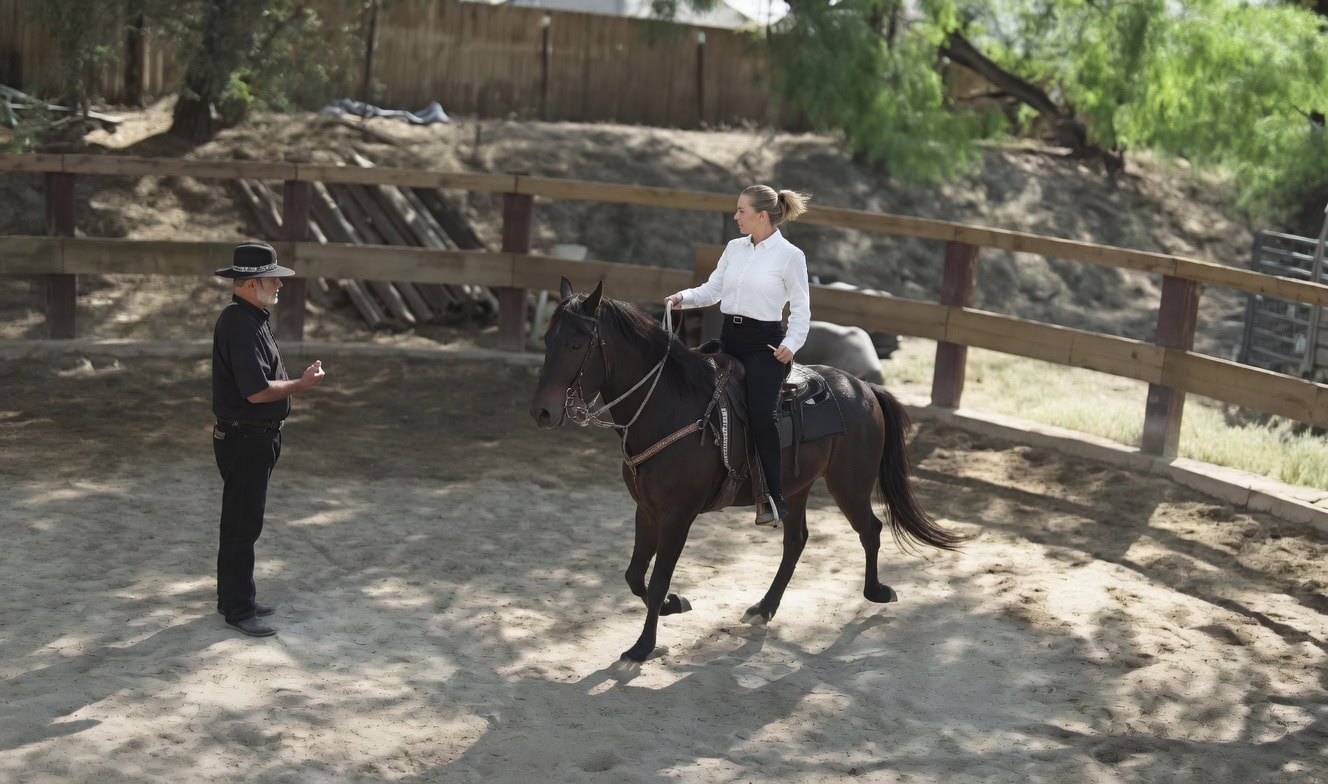
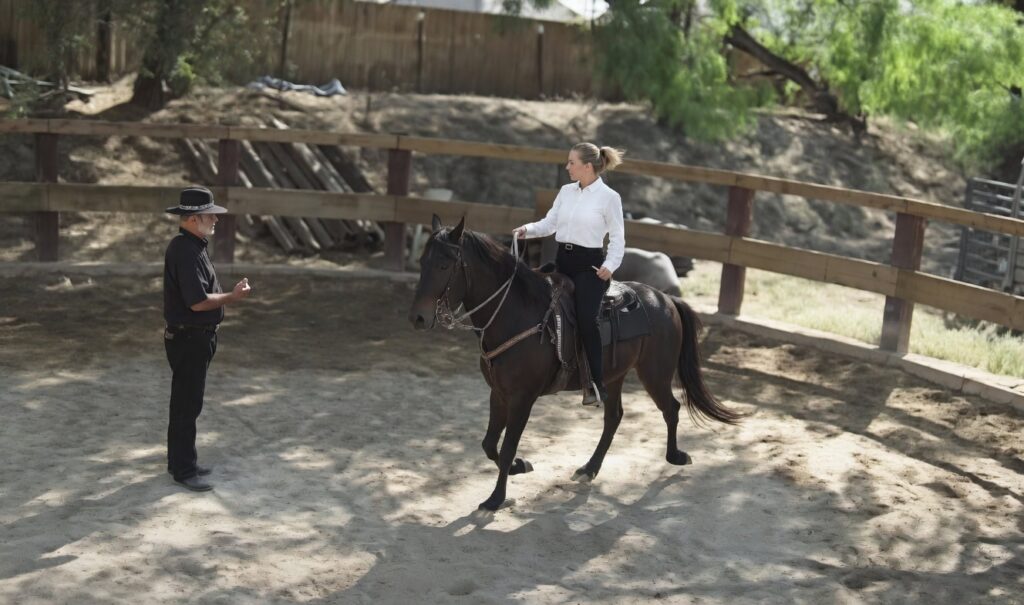
Horse training for beginners doesn’t have to mean years of expensive lessons or a trainer who charges more than your mortgage. With the right approach — one built on how horses actually think — any dedicated owner can train their own horse safely, humanely, and effectively. I’ve been proving that for fifty years.
My name is Al Ragusin. I’ve trained horses across nine disciplines, earned more than 300 championship titles, performed at the Rose Bowl, and appeared on CBS, PBS, RFD-TV, and FOX with my world-famous Dancing Horses. I created this horse training for beginners guide for the rider who is just starting out and wants a straight, honest roadmap — not fluff, not theory, not a pitch for a $2,000 clinic.
This is what works. Let’s begin.
In This Guide
- Understand How Horses Actually Think
- Essential Equipment for Beginner Horse Training
- Groundwork: The Foundation of Everything
- How to Communicate With Your Horse
- Step-by-Step Horse Training for Beginners
- The One Skill Every Horse Needs: Collection
- The Biggest Mistakes Beginners Make
- Frequently Asked Questions
1. Understand How Horses Actually Think — The First Lesson in Horse Training for Beginners
Before you begin horse training for beginners, you need to understand one fundamental fact about every horse you will ever train: horses are prey animals. Their entire psychology is organized around survival. When something frightens them, they don’t reason — they react. Understanding this is the single most important thing a beginner can learn.
Here is what that means in practice:
- Horses read energy, not words. If you are tense, frustrated, or rushing, your horse feels it before you do anything. Calm yourself first. Always.
- Horses are herd animals. They are wired to follow a trusted leader. Your job in training is to become that leader — through consistency, patience, and clear communication, not force.
- Horses learn through repetition and release. The reward is not a treat — it’s the release of pressure. When your horse does the right thing, you immediately remove the pressure. That release is how horses learn. This is called negative reinforcement, and it is the primary language of horses.
- Horses have no ego. They do not try to make your life difficult. When a horse misbehaves, it is almost always communicating confusion, fear, or pain — not defiance.
Spend time simply watching your horse in the field before you begin any formal training. Watch how horses interact with each other. Notice who leads, who follows, how space is used, how disputes are resolved. That is the natural language you are going to learn to speak.
2. Essential Equipment for Horse Training for Beginners
You do not need expensive equipment to begin horse training for beginners. You need the right equipment, properly fitted. Here is what to start with:
Halter and Lead Rope
A well-fitted nylon or rope halter and a 12-foot lead rope are your primary tools for all groundwork. The halter should sit two fingers below the cheekbone, not riding up into the eyes. The lead rope should be long enough to give the horse some freedom to respond but short enough that you maintain clear communication.
Saddle
Saddle fit matters more than saddle style. A poorly fitting saddle causes pain, which causes behavior problems — and new riders blame the horse. Before you train, have your saddle fitted by someone who knows what they are looking at. I am partial to the Australian saddle for beginners because it provides a deeper, more secure seat and dramatically reduces the risk of a fall.
Bit and Bridle
Start with a simple snaffle bit. A D-ring snaffle is forgiving, communicates clearly, and does not punish the horse for slight rider errors. Avoid shanked bits, curbs, or anything with leverage until you have an independent seat and soft, consistent hands.
Collection Reins (for intermediate beginners)
Once your horse understands basic groundwork and you are ready to ride with connection, the Ragusin Collection Reins are the most effective tool I have ever developed for teaching a horse to collect naturally. More on this in section six.
3. Groundwork: The Foundation of All Horse Training for Beginners
Every experienced horseman will tell you the same thing about horse training for beginners: groundwork is not optional. It is not something you do until your horse is old enough to ride. It is the entire foundation of every skill your horse will ever learn under saddle.
Groundwork teaches your horse to:
- Respect your personal space
- Move away from pressure
- Trust you as the leader
- Focus on you rather than distractions
- Accept handling of every part of its body
A horse that has solid groundwork is safer, calmer, more willing, and dramatically easier to train under saddle. A horse that skips groundwork is a horse that keeps its owner guessing — and sometimes on the ground.
How Long Should Groundwork Sessions Be in Horse Training for Beginners?
For horses new to training, keep sessions to 15–20 minutes. Horses have short attention spans and they consolidate learning during rest. Short, focused sessions every day will produce far better results than one long session per week. End every session on a positive note — finish with something the horse does well, even if it is just standing quietly.
4. How to Communicate With Your Horse
Communication is the core of all horse training for beginners and experienced trainers alike. In fact, learning to communicate clearly is where most beginners make or break their horse training for beginners journey. The difference is that experienced trainers have developed the ability to listen as much as they speak.
Your horse communicates constantly through body language. Learning to read it is as important as learning to give clear signals. Watch for:
- Ears pinned flat: Irritation, pain, or warning
- Tail swishing sharply: Annoyance or discomfort
- Head raised and neck tight: Alert, anxious, or ready to spook
- Licking and chewing: Processing new information — a very good sign
- Yawning: Releasing tension after a stressful moment
- Relaxed lower lip: Comfortable and at ease
When you begin communicating, use the same signals every time. Horses learn through repetition and consistency. If you ask for “walk” with a cluck one day and a leg squeeze the next and a verbal “go” the day after that, you are teaching your horse nothing except that humans are confusing.
The most important principle: always release the pressure the instant your horse does the right thing. Not three seconds later. Not after you praise them. The moment the correct response happens, the pressure comes off. That is the conversation.
5. Step-by-Step Horse Training for Beginners: The 8-Step Method
This is the sequence I recommend for anyone beginning horse training for beginners from scratch. Do not skip steps. Each one builds the foundation for the next.
Step 1: Halter Training
Your horse must accept the halter being put on and taken off calmly. Stand to the side — never directly in front — and work quietly until the horse drops its head willingly. This is not optional.
Step 2: Leading Correctly — Essential in Horse Training for Beginners
A horse that drags you, pushes into you, or lags behind is a horse that does not respect your space and does not understand that you are the leader. Teach your horse to walk beside you — not ahead, not behind. Stop when you stop. Start when you start. This simple skill changes everything about your relationship.
Step 3: Standing Still
A horse that won’t stand still cannot be safely groomed, tacked, examined by a vet, or mounted. Teach your horse to stand quietly for increasing periods of time, releasing all pressure the moment stillness happens.
Step 4: Yielding to Pressure
Your horse must learn to move away from pressure — moving hindquarters away when you push, moving forequarters over, backing up when asked. These are not tricks. They are fundamental safety skills and the building blocks of every riding cue you will ever use.
Step 5: Desensitization — A Critical Step in Horse Training for Beginners
Expose your horse gradually to things that might frighten them — plastic bags, tarps, flags, unusual sounds, water, trailers. Go slowly. Never flood the horse by forcing exposure to something that panics them. The goal is a calm, curious horse, not a terrified one that tolerates things. For guidance on horse safety during training, the American Association of Equine Practitioners publishes free horsemanship safety resources.
Step 6: Lungeing
Lungeing teaches your horse to move forward, change direction, and respond to voice and body cues from a distance. It also allows you to observe your horse’s movement and attitude before you climb on. A horse that is tense, spooky, or off on the lunge is not ready to carry a rider safely.
Step 7: Introducing Tack — Building Confidence in Horse Training for Beginners
Introduce the saddle pad first, then the saddle, then the bridle — in separate sessions, with plenty of time between each step if needed. Never rush tack introduction. A horse that was tacked before it was ready will tell you about it for years.
Step 8: First Rides — The Milestone Moment in Horse Training for Beginners
Keep first rides short — 10 to 15 minutes maximum. Stay in a calm, familiar environment. Have someone experienced on the ground if possible. Focus on forward movement and steering, not anything fancy. End the moment the session goes well.
6. The One Skill Every Horse Needs: Collection — Advanced Horse Training for Beginners
Collection is the single most misunderstood concept in horse training for beginners and experienced riders alike — and the one that matters most to the average beginner horse owner.
Here is the simplest possible explanation: a collected horse carries its weight on its hindquarters, lifts its back, and brings its face to the vertical. It moves in balance. It is easier to ride, easier to control, and significantly less likely to injure itself or its rider.
An uncollected horse carries too much weight on the forehand. It is heavy on the bit, difficult to balance, harder to steer, and uncomfortable to sit on — that bouncing, jarring trot that makes new riders miserable is almost always a horse moving on its forehand without collection.
Traditional training teaches collection over months or years of careful riding. Most beginners do not have the years or the trained seat required to teach it conventionally.
After fifty years of training horses across nine disciplines, I developed the Ragusin Collection Reins — a premium Latigo leather double rein system with a proprietary bungee mechanism that teaches horses to find collection naturally, without force. Most horses collect within the first 45 minutes of the first ride. I back every set with a 24-hour money-back guarantee: if your horse does not show improvement in the first 24 hours of riding, return them for a full refund.
For a beginner trying to learn horse training, this changes everything. You do not need an independent seat or years of experience to use them. The reins communicate directly with the horse. You learn together.
You can also watch me demonstrate the method in the free training videos on this site — including real before-and-after sessions with horses that had never been collected before.
7. The Biggest Mistakes in Horse Training for Beginners
In nearly fifty years of teaching horse training for beginners and advanced riders, I have watched thousands of people make the same mistakes. Here are the most common — and how to avoid them.
Rushing the Process — The #1 Mistake in Horse Training for Beginners
Horse training has no shortcut. If you rush groundwork to get to riding, you will spend years undoing the holes in your horse’s training. Take the time it takes. A solid foundation built in three months is worth more than a rushed foundation built in three weeks.
Training When Frustrated or Angry
If you are upset, go home. Horses feel emotion before they see it. An emotional session teaches your horse to associate training with stress — and that association is very hard to undo. Come back when you are calm.
Inconsistency
In horse training for beginners, changing your cues, your expectations, or your energy from session to session is the fastest way to create a confused horse. Decide what your cues mean, write them down if you need to, and use them the same way every single time.
Skipping Groundwork
Already covered this, but it bears repeating: beginners who skip groundwork because they want to ride end up with dangerous, unpredictable horses. Groundwork is not a delay. It is the training.
Using Too Much Force
Horses do not respond to dominance through force the way some trainers claim. Force creates resistance, fear, and shutdown — not respect. Respect comes from consistency, clarity, and correct release. Every harsh method you use today creates a problem you will solve for the next three years.
Expecting Human Logic From a Horse
Horses do not have bad days where they decide to misbehave. They do not understand revenge or punishment delivered more than three seconds after an event. They live in the present moment. Meet them there.

Written by Al Ragusin
Master Horseman · McAllen, Texas
Al Ragusin has 50+ years of professional horse training experience, with a specialty in horse training for beginners who want to learn without expensive professional trainers. across nine disciplines, including cutting, reining, dressage, and charro. He holds 300+ championship titles, performed at the Rose Bowl, and has appeared on CBS, PBS, RFD-TV, and FOX. He is the inventor of the Ragusin Collection Reins and the author of Confident Horseback Riding.
Ready to Skip Years of Struggle in Horse Training for Beginners?
The Ragusin Collection Reins help beginners and experienced riders achieve collection in the first ride — backed by Al’s 24-hour money-back guarantee.
Order the Collection Reins — Risk Free24-hour money-back guarantee · Free ebook included
Frequently Asked Questions: Horse Training for Beginners
Can a complete beginner start horse training for beginners at home?
Yes — with the right approach and realistic expectations. Most people who struggle with horse training are trying to skip steps or use methods that don’t match how horses actually learn. Start with groundwork, be consistent, and take your time. Thousands of riders with no professional background have trained excellent horses.
How long does it take to train a horse from scratch?
A horse with no prior training can typically be ready for basic riding in 60–120 days of consistent daily groundwork. Teaching specific skills — collection, leads, lateral work — takes additional time. The timeline depends entirely on the horse’s prior experience and the consistency of the trainer.
What is the most important thing to teach a horse first?
Respect for personal space and basic leading. A horse that respects your space and leads correctly is a horse that understands you are the leader. Every other skill you teach — under saddle or on the ground — is built on that foundation.
Is it better to use positive or negative reinforcement with horses?
Both have a place, but negative reinforcement — applying and releasing pressure — is the primary language horses use with each other and the most effective tool in training. Positive reinforcement with food rewards works well for specific behaviors but should not replace clear pressure-and-release communication. The key is immediate release the moment the correct behavior happens.
What age should you start training a horse?
Handling and basic groundwork can begin from birth. Formal under-saddle training should generally not begin until a horse is at least 2–3 years old, depending on breed and physical development. Most performance horses do not begin serious training until 3–4 years old. Starting too early can damage joints and growth plates.
What does “collection” mean in horse training?
Collection refers to a way of moving in which the horse shifts its weight to its hindquarters, lifts through the back, and brings its face toward the vertical. A collected horse is balanced, easier to ride, more responsive, and less likely to injure itself. Traditional methods take months or years to teach collection — the Ragusin Collection Reins can achieve it in the first ride.
Do I need a trainer to start horse training as a beginner?
Not necessarily. Horse training for beginners does not require a professional trainer. Many beginners successfully train their own horses using quality educational resources, videos, and consistent practice. Having an experienced ground person present during first rides is strongly recommended for safety. If you encounter specific behavioral problems that feel beyond your current skill level, consulting a professional for that particular issue is a smart choice — not a failure.
Continue Your Horse Training for Beginners Journey